Pain and Inflammation
Pain and Inflammation Therapy
Pain and inflammation can affect your sleep, mobility and everyday life. Our range of non-invasive treatments, including Shockwave Therapy, MLS Laser Therapy and Kinesiology Taping (K-Taping), are designed to help relieve discomfort, support the body’s natural healing processes and improve movement.
Whether you’re managing a long-term condition or recovering from an injury, we’re here to help you feel more comfortable and get back to doing what you love.
Shockwave Therapy
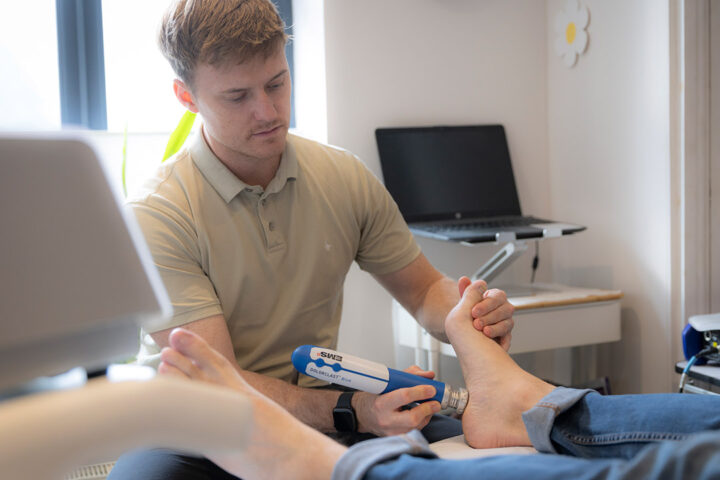
Shockwave therapy, also known as extracorporeal shockwave therapy (ESWT), is a treatment method that uses acoustic waves to stimulate healing in injured tissues. One of the key mechanisms behind its effectiveness is how it intentionally triggers a localised inflammatory response, which is paradoxically a good thing in this context.
Ideal for conditions like plantar fasciitis and Achilles tendonitis, this non-invasive treatment delivers sound waves to affected tissues, promoting faster and more effective healing.
Shockwave therapy is commonly used for:
- Plantar fasciitis
- Achilles tendinopathy
- Tennis/golfer’s elbow
- Shoulder tendinopathy (e.g. rotator cuff issues)
- Chronic muscular pain and trigger points
How Shockwave Therapy Works
Delivery of Acoustic Waves
Shockwaves are high-energy sound waves delivered to the affected area using a handheld device. These waves penetrate the skin and reach deeper tissues.
Microtrauma & Mechanical Stress
The shockwaves create microtrauma or controlled mechanical stress in the tissue. This isn’t enough to cause damage but is sufficient to “wake up” the body’s repair mechanisms.
Induced Inflammation – the Healing Trigger
- The microtrauma stimulates an inflammatory response in the treated area.
- This is crucial: inflammation is the body’s first stage of healing.
- White blood cells, growth factors, and other immune mediators are recruited to the site.
- Blood flow increases, bringing nutrients and oxygen to promote tissue regeneration.
You may not be able to have shockwave with the following:
- Pregnancy
- Over major blood vessels and nerves
- Pacemakers or other implanted devices
- Open wounds
- Joint replacements
- Epiphysis
- Blood clotting disorders including thrombosis
- Infection
- Cancerous tissues
- A compromised mental status of the patient and/or the inability to cooperate.
Click here for pricing
| Package of 3 | Allow 30 minutes Appointments 1 week apart | £180.00 |
| 1 Session | Allow 30 minutes | £65.00 |
FAQs
How many sessions do I need?
The number of shockwave treatments required will vary depending on the individual, the severity of the injury, and how long the condition has been present.
Some patients may benefit from a single treatment, while others may achieve better results from a course of sessions.
We offer both individual treatments and a discounted package of 3 sessions.
Does Shockwave Therapy Hurt?
Shockwave therapy is generally described as uncomfortable or intense rather than strictly painful, although individual experiences vary.
Post-Treatment Soreness: It is normal to feel mild aching, tenderness, redness, or to the treated area for 24 to 72 hours after a session.
Sensations: Most patients feel a rapid, rhythmic tapping, pulsing, or vibration against the skin.
Body Location: Areas with less muscle and thin tissue (such as over the hip bone or shin) can feel more sensitive or sharp than meatier areas like the calves.
Intensity Control: The machine’s output can be adjusted live, meaning your clinician can lower the intensity immediately if it feels too strong
MLS Class 4 Laser Therapy
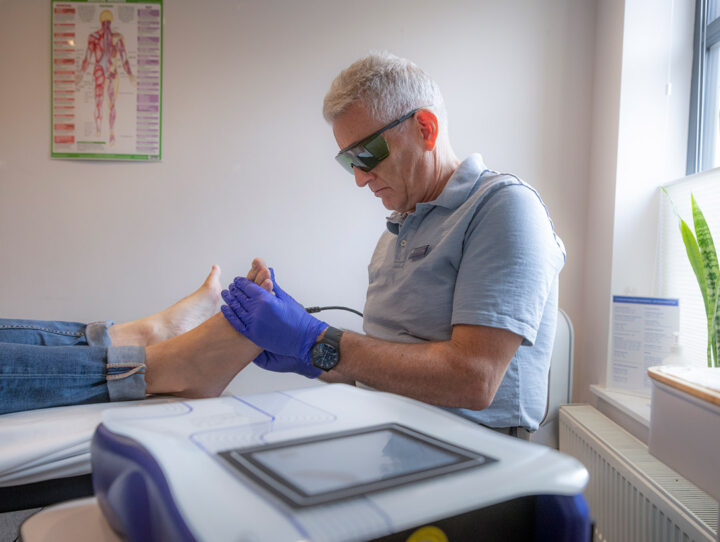
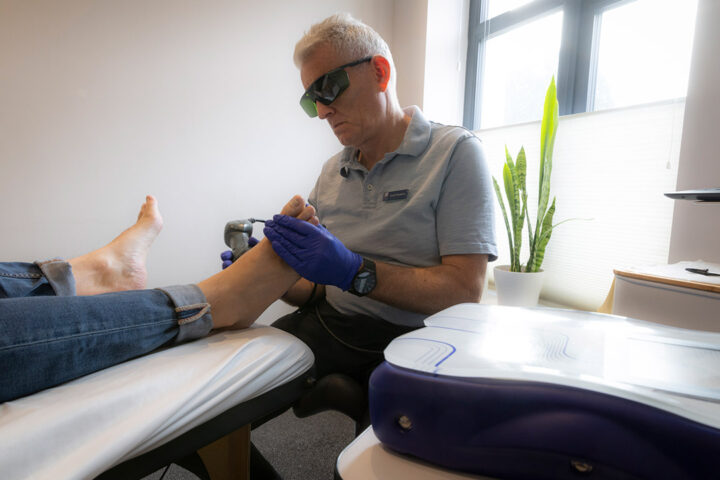
MLS (Multiwave Locked System) laser therapy works by delivering light energy to your cells, which then absorb this energy and convert it into cellular energy. This process stimulates blood flow, reduces inflammation, and accelerates tissue repair – all of which are crucial for healing.
This state-of-the-art therapeutic laser calms inflammation and promotes healing for both acute injuries such as sprained ankles and chronic conditions like arthritis.
MLS Laser is commonly used for:
- Plantar Fasciitis
- Neuropathy
- Muscle spasm and pain
- Arthritis
- Sprains and strains
- Hip, Back & Knee Pain
- Sciatica
- Bursitis
- Tendonitis
- Haematoma and oedema
- Sports injuries
How Laser Therapy Works
Laser therapy involves directing laser light energy into inflamed or damaged tissues to accelerate the body’s natural healing process. The laser is placed in direct contact with the skin which enables light photons to penetrate the tissue and interact with molecules within the cell to cause several biochemical effects.
What to expect:
After a full clinical assessment of your condition, we will tailor make a treatment protocol just for you. The number of sessions you will require will depend on the condition – this will be discussed in your initial appointment. Treatments are quick and painless and often you will feel the results during the first treatment. For chronic conditions it may take a few sessions for you to feel the effects, but the cellular benefits will be immediate.
Laser has the following effects:
- Inhibits the sensory nerve impulses associated with pain.
- Decrease inflammatory cells.
- Relaxes muscle spasm immediately.
- Increases vascular supply and restores normal blood flow.
- Provides energy for the cells within the tissue allowing them to repair. (This promotes healing and helps speed the recovery process.)
Click here for pricing
| Package of 3 | Allow 30 minutes Appointments 1 week apart | £180.00 |
| 1 Session | Allow 30 minutes | £65.00 |
Appointments need to be 1 week apart
Available as 1 session, however a course of 3 is recommended for the most benefit.
FAQs
How many sessions do I need?
Laser therapy has a cumulative effect, meaning the benefits can build over a series of treatments. For this reason, a course of sessions may be recommended to help achieve the best possible outcome.
Following an assessment, we can recommend a personalised treatment plan tailored to your condition, recovery needs and goals.
Does MLS Laser Therapy hurt?
Not at all! MLS Laser Therapy is a gentle, non-invasive treatment that is typically painless. Most people feel little to no sensation during the session, making it a comfortable option for managing pain and inflammation.
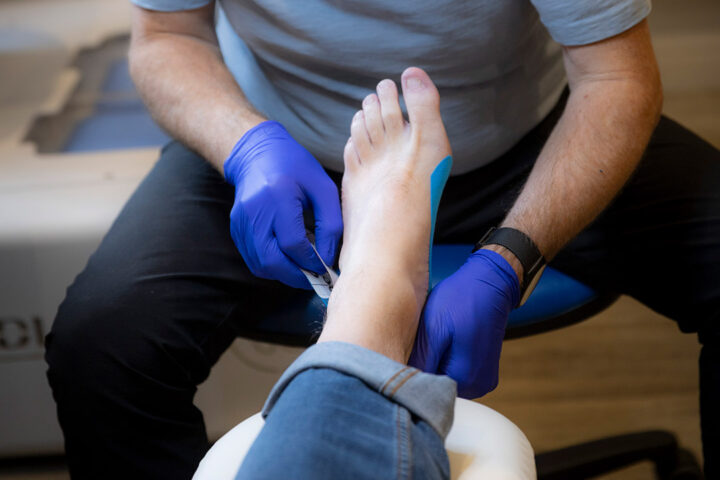
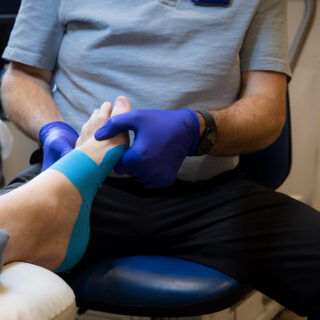
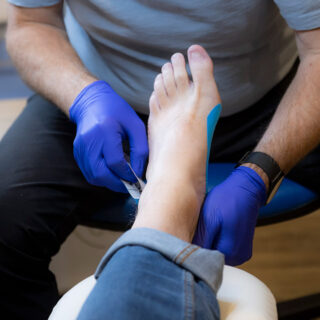
Kinesiology Taping
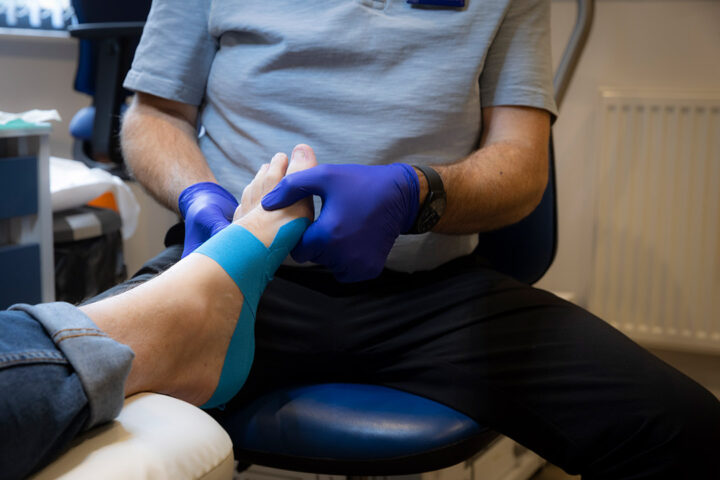
Kinesiology taping (K-Taping) is a gentle, non-invasive technique that uses flexible, adhesive tape to support muscles and joints, help relieve pain and inflammation, and encourage natural movement. Unlike traditional sports tape, K-tape moves with your body, providing support without restricting mobility.
- Improved Athletic Performance
- Decreased Pain
- Increased Circulation and Decreased Inflammation
- Improved Posture and Muscle Support
How K-Taping Works
Decreased Pain:
By gently applying pressure, kinesiology tape helps to disrupt and dissipate pain.
Increased Circulation and Decreased Inflammation:
The tape can help remove congestion while allowing efficient circulation of oxygenated blood and lymphatic fluids. Circulation flushes out irritants, thereby reducing inflammation and chemical buildup and fostering a speedy recovery.
Improved Posture and Muscle Support:
Taping areas that veer away from correct posture can help gently support proper posture. Proper taping also enables weak muscles to function efficiently, reduces pain and fatigue, and protects against cramping, over-extension, and over-contraction.
Improved Athletic Performance:
By supporting unstable joints and delivering slight pressure to “sleeping” muscles, taping can prompt higher performance. Unlike other assistive devices that can lead to dependence on them for stability and support, kinesiology tape trains the body to become independent and efficient.
Click here for pricing
| K-Taping | Allow 15 minutes | £18.00 |
FAQs
How long should I keep the K-Tape on?
K-tape can usually be worn for 3–5 days, depending on your skin sensitivity and the area being treated. It is water-resistant, so you can shower with it on. Gently pat the tape dry afterwards and avoid rubbing it. If you experience any itching, redness or irritation, remove the tape immediately.
What conditions can K-taping help with?
K-taping may help manage a range of musculoskeletal concerns, including muscle strains, joint discomfort, swelling and sports-related injuries. It can also be used alongside other treatments to support recovery.